Digital Innovation and Sustainability: How GPI and Partners Are Building New York’s Flood Resilience
As climate change continues, coastal cities like New York face mounting risks from sea level rise and increasingly severe storms. Proactive planning and innovative engineering have become essential. The Brooklyn Bridge–Montgomery Coastal Resiliency (BMCR) project stands as a testament to what is possible when advanced digital tools and a commitment to sustainability converge. Led by the New York City Department of Design and Construction (NYCDDC) and managed by the Jacobs–Greenman-Pedersen Inc. (GPI) joint venture, BMCR is redefining how urban infrastructure can be resilient, efficient, and environmentally responsible.
Building for a Changing Climate
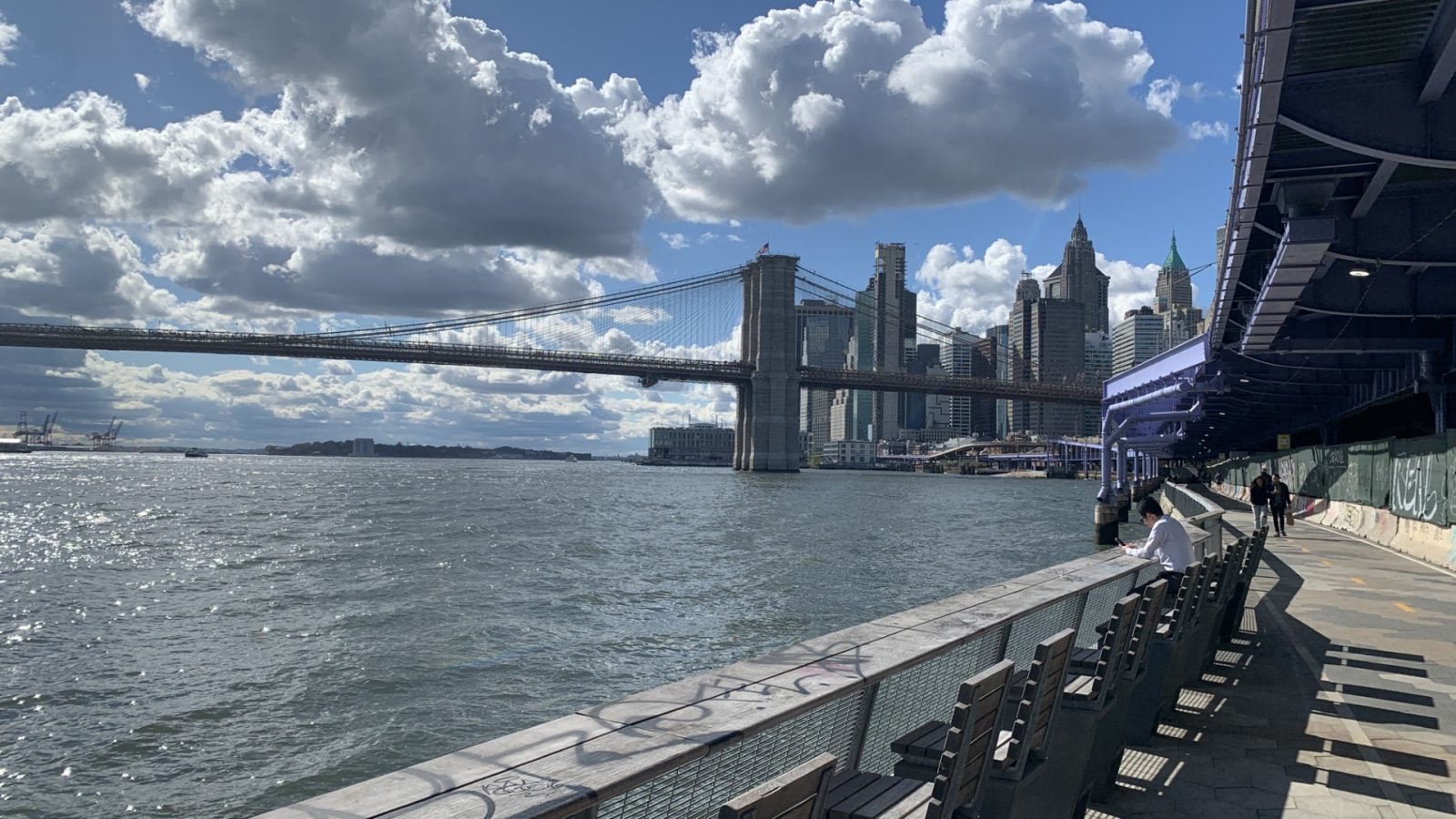
New York City’s Two Bridges neighborhood, located between the iconic Brooklyn Bridge and Montgomery Street, is home to thousands of residents experiencing climate uncertainty. The BMCR project is essential because Superstorm Sandy (2012) and ongoing tidal flooding underscore the neighborhood’s vulnerability, and climate projections indicate that storms are expected to become more frequent and severe, thereby increasing risks to housing, infrastructure, and quality of life.
To address this challenge, NYCDDC launched the BMCR project, scheduled for completion by 2026, with the goal of reducing flooding risk while preserving public access and the area’s recreational appeal. The solution is as elegant as it is effective: a series of permanent, deployable flood barriers that remain hidden when not in use. This approach ensures that water views and shoreline amenities, such as open-air seating, fitness equipment, and athletic courts, are maintained for the community. Learn more in a recent case study from Bentley.
Digital Transformation: SYNCHRO 4D and BIM Integration
Delivering a project of this complexity in one of the world’s most intricate urban environments required more than traditional construction management. The BMCR team faced a complex web of buried infrastructure, ongoing development, and the constant risk of conflicts with other projects and utilities.
Recognizing these challenges, Jacobs and GPI formed a joint venture to provide project and construction management services. Their solution was to harness the power of Bentley’s SYNCHRO 4D and advanced Building Information Modeling (BIM) technologies.
- 3D, 4D, and 5D BIM Modeling: GPI developed detailed 3D models capturing the complex geometry of flood protection structures, underground utilities, and public infrastructure. 4D BIM linked the construction schedule directly to the model, enabling real-time simulations and optimizing sequencing and coordination. 5D BIM added cost data, allowing the team to visualize and track expenses alongside project progress.
- Simulation and Flexibility: The team converted approximately 2,000 construction activities into a single digital representation. This model could be easily adjusted as new developments or maintenance projects emerged, ensuring seamless integration with the city’s ever-evolving landscape.
- SYNCHRO 4D: This platform enabled field resident engineering inspection, critical path method scheduling, value engineering, and risk management, all within a dynamic, visual environment.
Measurable Impact: Efficiency, Safety, and Cost Savings
The adoption of digital construction tools delivered major benefits, including:
- Clash Detection and Resolution: Clear visualization reduced the time needed to identify and resolve clashes from 24–32 hours to just 8–12 hours.
- Efficiency Gains: 4D construction sequencing improved understanding of construction methodologies by 50% and made risk identification 50% easier.
- Cost Savings: Preparation time for cost reports dropped by 25%, and proactive planning minimized costly rework and on-site disruptions.
- Enhanced Safety: By resolving issues with existing infrastructure and buried services before construction began, the team improved jobsite safety and reduced the likelihood of delays.
These results underscore the value of integrating digital workflows into every phase of project delivery.
Sustainability by Design: From 6D BIM to Envision Framework
GPI’s commitment to sustainability goes beyond compliance. It is embedded in every aspect of the BMCR project.
- 6D BIM Integration: Building on the foundation of 3D, 4D, and 5D BIM, GPI incorporated 6D BIM principles to track energy use, carbon emissions, and environmental impact throughout the project lifecycle. This data-driven approach informed sustainable design choices, such as replacing hundreds of concrete micropiles with a sand and gravel bed for a trunk water main, which saved millions, cut carbon emissions, and reduced noise and fuel consumption.
- Envision Framework Alignment: GPI’s technology-driven approach directly supports the Envision framework for sustainable infrastructure, reducing environmental impact, rework, and resource use across the project lifecycle.
- 7D-Ready Models: The project’s BIM models are being prepared for future 7D integration, which will embed data to support operations, maintenance, and long-term facility management, maximizing the value of public investment.
Lessons Learned and Broader Implications
The BMCR project demonstrates that digital construction tools, such as SYNCHRO 4D and advanced BIM modeling, are more than technical upgrades. They are strategic enablers for resilience, sustainability, and stakeholder collaboration.
- Collaboration: Real-time 360° imaging, AI-based progress monitoring, clash detection, and automated reporting foster transparency and smarter decision-making among all stakeholders.
- Scalability: These practices set a new standard for future urban infrastructure projects, especially those facing the dual challenges of climate resilience and complex stakeholder environments.
- Sustainability: By integrating innovation and sustainability into every phase of design and delivery, GPI is helping to build greener, more resilient cities.
GPI’s Comprehensive 3D/4D/5D BIM Services: Scope and Impact
GPI’s BIM and Virtual Design & Construction (VDC) services cover the full spectrum of site/civil and structural elements essential to complex infrastructure projects:
- Site/Civil: Grading, roadway pavement, utilities, lighting/power, drainage, site plumbing (hydrants, fountains, piping), watermains, and appurtenances.
- Structural: Fences, fixed walls, flood gates (including mechanical components), intermediate posts, tie-ins, and soil stabilization.
- Traffic: Signals, pavement markings, signage.
- Specialized Facilities: Parallel conveyance and isolation gate chambers, Interceptor Gate Building (IGB).
- Landscaping: Integration of green spaces and site enhancements.
GPI’s BIM teams:
- Generate and manage digital representations of physical and functional infrastructure characteristics.
- Use advanced software (e.g., Autodesk Revit) for detailed 3D modeling, clash detection, and as-built updates.
- Maintain federated models and coordinate scope changes, additions, or deletions.
- Facilitate collaboration among architects, engineers, contractors, and owners.
- Support 4D/5D simulation for schedule and cost optimization.
Sustainability in Action: Clean Construction Pilot Program
The BMCR project is participating in New York City’s Clean Construction Pilot Program (Executive Order 23), supporting citywide efforts to reduce air and noise pollution and advance environmental justice. As part of this initiative, BMCR is testing six pieces of electric construction equipment, including tampers, haulers, and excavators, during Q3–Q4 2025 (test duration: 2–6 months). This pilot aims to slash harmful emissions, improve quality of life, and set a precedent for future clean construction practices.
The Bottom Line
The Brooklyn Bridge–Montgomery Coastal Resiliency project is more than a flood barrier – it acts as a blueprint for the future of urban infrastructure. By embracing digital innovation and sustainability, GPI and its partners are not only protecting New York City’s shoreline but also setting a new benchmark for efficiency, safety, and environmental stewardship.
As cities around the world confront the realities of climate change, the lessons from BMCR offer a powerful reminder: with the right tools and vision, we can build infrastructure that is both resilient and sustainable.
About the Authors

Ameya Talekar, CST, M. ASCE
Ameya Talekar is a projects control manager for construction services with over 17 years of experience managing high-stakes infrastructure & building projects and programs worldwide. He specializes in driving results through CPM Scheduling, claims handling, 4D/5D modeling, Schedule risk analysis and strategic planning, while leveraging digital technologies to elevate scheduling and claims management. A graduate of the University of Mumbai (India) and NICMAR University (India), Ameya has contributed to securing a Founder’s Honors recognition at Bentley’s 2024 Going Digital Awards and the 2025 STA Innovation Award for the New York City Department of Design & Construction (NYC DDC)’s Brooklyn Bridge-Montgomery Coastal Resilience project and has presented on Digital Tech in Construction and Project Controls topics at AACE events. In his role, Ameya leads CPM scheduling, construction claims, and digital tech in project controls initiatives on public-sector programs for clients such as the Port Authority of New York and New Jersey, NYC DDC, MTA TB&T, NYS Thruway and NYC DOT.

Frank Wefering, ENV SP
Frank Wefering is GPI’s Director of Sustainability with 30 years of experience working across sectors to advance sustainable development and climate resilience. His focus includes sustainable transport and mobility, both as a policy area and as a driver of equitable, low-emission communities. A graduate of the University of Münster, Germany, and North Carolina State University, Frank’s notable achievements include his work with municipalities and institutions around the world to improve sustainable transport systems, promote urban mobility, and support local climate action. He serves the United Nations Department of Economic and Social Affairs (UN DESA) as Sustainable Transport Advisor, and provides policy and planning assistance aligned with the Sustainable Development Goals (SDGs). In his role, Frank leads company-wide sustainability initiatives and authored GPI’s Sustainability Policy and Corporate Responsibility and Sustainability Plan.